
The mandated Congressional cap is of 65,000.
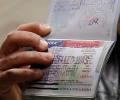
US lawmakers have expressed concerns that policies enacted by the Trump administration, such as the H1B visa fee and tariffs on India, are detrimental to American businesses and threaten the relationship between the United States and India.
Once the most sought after H-1B American work visa is still having nearly 20,000 slots open seven weeks after the US Citizenship and Immigration Services (USCIS) started receiving applications for the financial year 2010 beginning October this year.

One in 10 employees at California-headquartered technology unicorns now work from India, surpassing other major US tech hubs and several countries, driven by US visa restrictions and substantial cost savings.

'One important clarification is that the reported US action is not a blanket cancellation of all US tourist visas.'

'...but could demotivate employees seeking US residency.'
Many foreigners, including Indians, have benefitted from the immigration visa.

This will be the first face-to-face meeting between Rubio and Jaishankar following President Donald Trump's imposition of an additional 25 per cent tariff on India for Delhi's purchases of Russian oil, taking the total levies imposed on India by the Trump White House to 50 per cent.
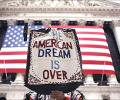
US is the largest market for the over $140 billion Indian IT services industry

The US is planning to resume the process of domestic visa revalidation in certain categories, like H-1B and L1 visas, on a pilot basis later this year, a move that will benefit tens of thousands of foreign tech workers, particularly from India. Until 2004, certain categories of non-immigrant visas, particularly the H-1B, could be renewed or stamped inside the US. After that, for the renewal of these visas, in particular, those on H-1B, the foreign tech workers have to go out of the country, mostly to their own country to get the H-1B extension stamped on their passport.

The US has received a sufficient number of petitions needed to reach a cap for the much-sought-after H-1B foreign work visas for the fiscal year 2024, a federal agency has announced. The H-1B visa is a non-immigrant visa that allows US companies to employ foreign workers in speciality occupations that require theoretical or technical expertise. Technology companies depend on it to hire tens of thousands of employees each year from countries like India and China.
Analysts predict that the US midterm election results, which saw Democrats gain control of Congress, will primarily influence Indian markets through changes in global financial conditions, trade policy expectations, and geopolitical developments, with a keen focus on the US administration's actions in West Asia and their potential impact on crude oil prices.

The US needs to understand that it could potentially lose out on attracting several Netravalkars in the future if it curbs the influx of such industrious Indian immigrants, argues Vishal Menon.

If the Indian government is indeed serious about reversing brain drain, it needs to put much more emphasis on research and innovation, especially in areas that will determine the future, asserts Prosenjit Datta.

Where do Indian IT firms stand compared to their global peers in this journey of transformation? Ayan Pramanik seeks answers from IT services analyst Phil Fersht.

The Congress party has accused the Modi government of succumbing to US pressure by introducing a 0.4% Merchant Discount Rate (MDR) on UPI transactions over Rs 2,000 for merchants. The party alleges this move aims to benefit US card companies and links it to broader US actions against India, including tariffs and H-1B visa issues. The government, however, clarifies that consumers will not be charged.

US President Donald Trump signed a proclamation restricting entry of certain non-immigrant workers and imposing a USD 100,000 fee on H-1B visas, citing abuse of the program and national security concerns.
The US Citizenship and Immigration Services would accept petitions for the H-1B work visas on the first five working days beginning April 1.

A strident bill concerning US work visas for non-US citizens has been re-introduced before the US Senate. A look at the bill.

It has been the preferred visa for Indian IT companies and has helped them keep costs down and gain a margin advantage over multinational players by sending engineers to the US.

Almost all Indian IT companies pay between $8,000 and $10,000 per H1B visa as per the hike

US H1-B visa cap reached within 5 days for 3rd straight year.
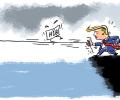
US President Donald Trump is considering suspending a number of employment visas including the H-1B, most sought-after among Indian IT professionals, in view of the massive unemployment in America due to the coronavirus pandemic, according to a media report. The proposed suspension could extend into the government's new fiscal year beginning October 1, when many new visas are issued, The Wall Street Journal reported on Thursday, quoting unnamed administration officials.

Also looks at setting up development and training centres in the US to tide over visa-related issues
The Indian IT companies, which account for a large number of H-1B applications, are likely to face the additional financial burden because of this proposed increase in H-1B filing fees.
Here's a look at how many of the visas they and other top Indian outsourcers used...
The proclamation that comes into effect on June 24, is expected to impact a large number of Indian IT professionals and several American and Indian companies who were issued H-1B visas by the US government for the fiscal year 2021 beginning October 1.
Dr Arun Vakil discusses US tourist visas, study visa and various work visas. He also details the procedure for using Visa Facilitation Services.
Arun Vakil answers reader questions about F1, H1B and travel visas. How should you present your assets? What questions should you expect from visa officers?

A year ago, when thousands of people were handed pink slips, the USCIS had received 42,000 H-1B applications.

The Biden administration has proposed a massive hike in immigration fees, including the much sought-after H-1B visas for high-skilled foreign workers, which is very popular among Indian tech professionals. Under the proposed rule, published by the US Citizenship and Immigration Services (USCIS) on Wednesday, the application for the H-1B visa increases from $460 to $780, and L-1 from $460 to $1,385. The application fee for O-1 visas has been proposed to increase from $460 to $1,055.
US President Donald Trump has extended the freeze on the most sought-after H-1B visas along with other types of foreign work visas by three months to protect American workers, saying while therapeutics and COVID-19 vaccines are recently available, their effect on the labour market and community health has not yet been fully realised. The decision will impact a large number of Indian IT professionals and several American and Indian companies who were issued H-1B visas by the US government for the fiscal year 2021 beginning October 1. The freeze on various categories of work visas was ordered by Trump through two proclamations on April 22 and June 22 last year.
India's second-largest information technology services provider, Infosys Technologies, has applied for a mere 405 visas till date for financial year 2009-10 - its lowest application count in recent years.

This could come as a setback to thousands of Indian engineers who have waited for years for their work visas to pave the way for the coveted Green Card.
Indian outsourcers file the most applications for temporary H-1B visas. Are they using them to train staff for jobs abroad?
A group of influential lawmakers have introduced a bipartisan legislation in the US Senate to comprehensively overhaul the H-1B and L-1 visa programmes and usher in more transparency in the recruitment of foreign workers. The H-1B visa is a non-immigrant visa that allows US companies to employ foreign workers in speciality occupations that require theoretical or technical expertise. Technology companies depend on it to hire tens of thousands of employees each year from countries like India and China.
US Congress is planning to further tighten provisions on the visas giving employers less flexibility in using them and making them a riskier bet for foreign employees seeking a long-term future in America.

From May 26 onwards, the US Citizenship and Immigration Services will begin accepting applications for work visas from H-IB spouses, reports Aziz Haniffa/Rediff.com.

The United States Citizenship and Immigration Services has announced that it has reached the cap on Congressionally mandated 65,000 H-1B work visas, the most sought after by Indian professionals.

India's $280-billion IT industry heads into 2026, balancing visa-related headwinds and global trade uncertainty against its biggest-ever push into artificial intelligence and the rapid expansion of global capability centres (GCCs). Heightened scrutiny of the US H-1B visa programme - including a proposed $100,000 fee for new visas and concerns over a potential 25 per cent outsourcing tax - has complicated cross-border delivery for Indian firms, even as companies accelerate efforts to reduce reliance on onsite staffing.
